
EVTC Toolkit
Resources and reminders to support your work between sessions.
This page is a living collection of tools, visuals, and concepts we reference in session. Bookmark it and come back whenever you need a reminder.
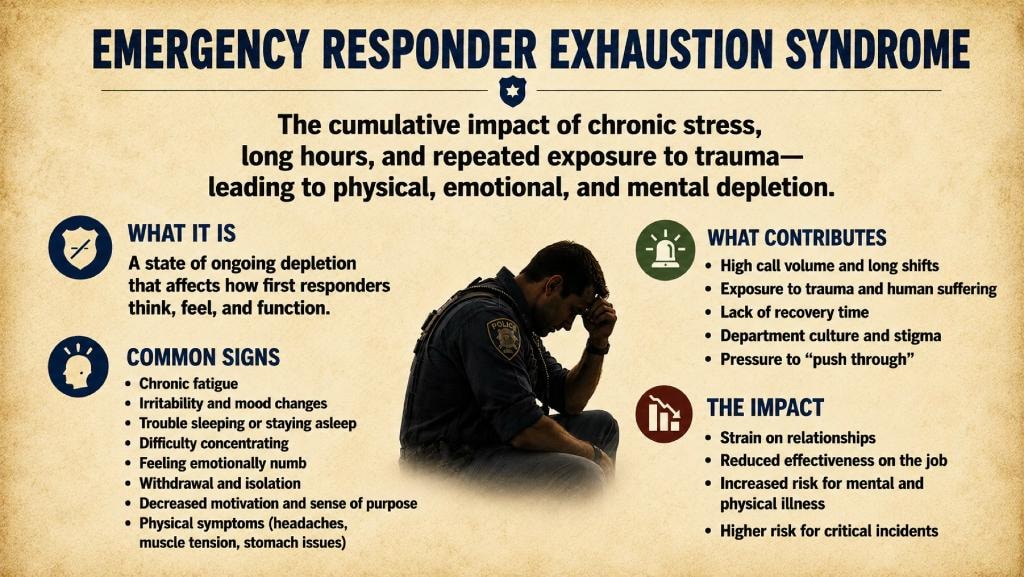
What is Emergency Responder Exhaustion Syndrome?
The key characteristics of ERES are depression, isolation, and physical and emotional exhaustion. First responders regularly suppress the brain's automatic response system of fight/flight or freeze/collapse — literally "running in" while everyone else is "running out."
Your Nervous System and the Job
First responders are trained to override their body's natural alarm system — but that system never stops keeping score.
Every time you respond to a call, your nervous system activates a survival response: heart rate spikes, adrenaline floods your body, and your brain shifts into threat-detection mode. You're trained to push through it — and you do. But the nervous system doesn't distinguish between a training drill and a mass casualty event. It responds the same way, every time.
Over years of repeated activation without adequate recovery, the nervous system can become dysregulated. This means it may stay stuck in a state of high alert even when you're off duty — making it hard to sleep, relax, connect with family, or feel safe. Or it may swing the other direction, leaving you feeling numb, disconnected, or emotionally flat.
This isn't weakness. It's biology. The same nervous system that makes you effective on the job is the one that needs care off the job. Trauma-focused therapies like EMDR and Brainspotting work directly with the nervous system — not just the story of what happened, but the body's stored response to it.
"You don't have to be in crisis to benefit from therapy. Many first responders come in not because something is "wrong" — but because they want to stay well."
Reflective Listening
"Most people do not listen with the intent to understand; they listen with the intent to reply."
— Stephen R. Covey, The 7 Habits of Highly Effective People
Goal
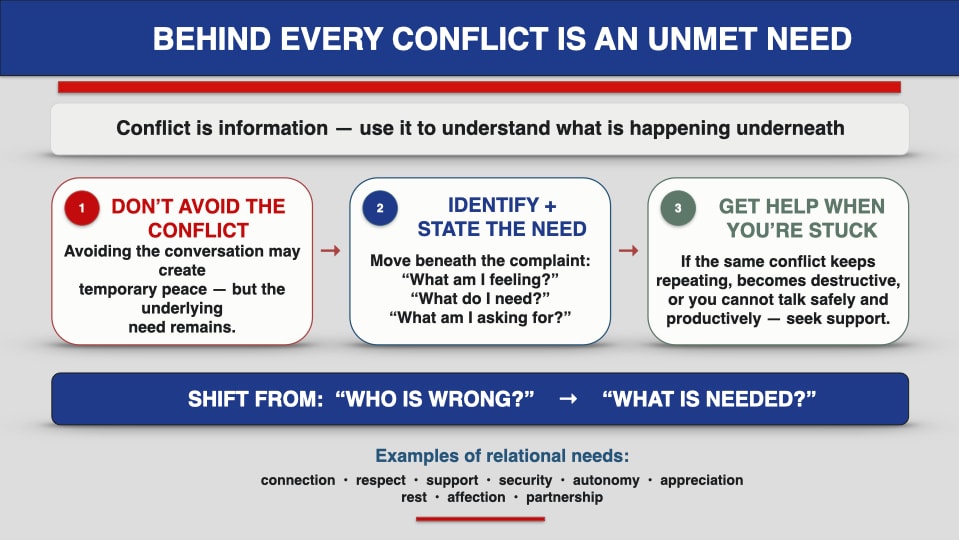
To be able to hear each other and not end up in a shouting match to be understood; to see that a message is actually received.
Speaker Guidelines
- Think before you speak — exactly what do you want to convey?
- Use "I" statements: "I feel [EMOTION] about/when [EVENT] because [how it affects you]."
- Be brief. Too many words confuses a listener and your message can get lost.
- Do not use the word "you" — it elicits defensiveness. Stick with YOUR feelings and situations.
- Avoid attacks, all-or-nothing language, "always," and "never." Stick with the original message.
Listener Guidelines
- Listen before you speak. Notice tone, body language, and emotion coming from the speaker.
- DO NOT RESPOND until the speaker feels heard. It is your turn only to listen.
- Avoid "but" — it is dismissive of what the speaker said.
- Reflect back how you understood the message: "You are saying ___." / "I am hearing ___."
- Reflect back the emotion: "You feel ___ because ___."
- When the speaker feels heard and confirms you received the message as intended, you switch roles.
Helpful Reminders from Our Sessions
The Polyvagal Ladder — understanding your nervous system states of safety, danger, and life threat, and how they show up in daily life.
What Is EMDR?
Eye Movement Desensitization and Reprocessing — how it works, what to expect, and the conditions it treats.
What Is Brainspotting?
A brain-body approach to processing trauma stored below conscious awareness.
What Is IFS?
Internal Family Systems — understanding the many parts of yourself and how they work together.
Expectations of Therapy
What to expect from the therapeutic process, types of providers, fees, insurance, and the no-show policy.
Videos & Podcasts
Curated video content and podcast episodes featuring topics relevant to trauma, first responders, and mental health.
Have a question about something we covered?
Bring it to your next session — or reach out directly.
Schedule Appointment